
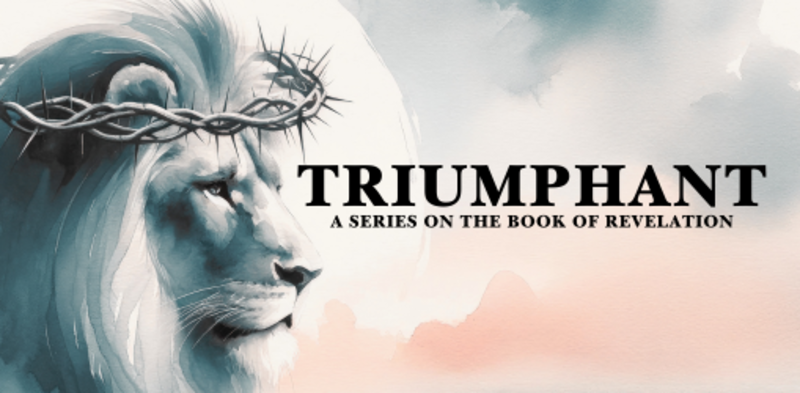
Revelation 4 is one of those chapters in the Bible that should leave us breathless by its sheer majesty and beauty. There are moments in this world that cause us to step back and marvel—yet even those are only a faint glimpse of something far greater: “O LORD, our Lord, how majestic is your name in all the earth! You have set your glory above the heavens” (Ps. 8:1).
Scripture gives us glimpses that prepare us for what John sees here. Moses stood before a burning bush and was told, “Take your sandals off your feet, for the place on which you are standing is holy ground,” and when God revealed Himself, Moses hid his face (Exod. 3:1–6). Isaiah saw the Lord “high and lifted up,” heard the seraphim cry, “Holy, holy, holy is the LORD of hosts,” and responded, “Woe is me! … for my eyes have seen the King,” yet even there mercy followed: “Your guilt is taken away, and your sin atoned for” (Isa. 6:1–8).
But there is another scene that parallels Revelation 4 in a particularly striking way—Exodus 19. And what we are about to read is nothing less than a glimpse of what it looks like when the living God descends in power and glory:
On the morning of the third day there were thunders and lightnings and a thick cloud on the mountain and a very loud trumpet blast, so that all the people in the camp trembled. Then Moses brought the people out of the camp to meet God, and they took their stand at the foot of the mountain. Now Mount Sinai was wrapped in smoke because the Lord had descended on it in fire. The smoke of it went up like the smoke of a kiln, and the whole mountain trembled greatly. And as the sound of the trumpet grew louder and louder, Moses spoke, and God answered him in thunder. The Lord came down on Mount Sinai, to the top of the mountain. And the Lord called Moses to the top of the mountain, and Moses went up.
At Sinai, the people stood at a distance and trembled—but in Revelation 4, a door stands open in heaven, and John is invited to come up and see. And what is staggering is this: the same God who descended in fire at Sinai now reveals Himself from the throne of heaven.
Before we begin, since Revelation 4–5 is the first of seven heavenly throne-room scenes, you need to understand why it is here. These scenes are not given to satisfy our curiosity, but to fuel our worship. They shape our perspective and reorient our lives. They serve as a lens through which we are to see all of human history. In other words, before John is shown what is happening on earth, he is first shown what is true in heaven.
Yahweh is a Sovereign God (vv. 1-2)
John looks—and behold… an open door! He is invited into the throne room of God, much like the prophet Isaiah, who was given a vision of the same sights and sounds. The apostle Paul experienced something similar in 2 Corinthians 12:2–4, when he was taken up to what he called the “third heaven” and said that what he heard “were too sacred for words, things that man is not permitted to tell.” What John is invited to see is the very place where God’s presence dwells—what we know as heaven. We are not told whether this was an in-body or out-of-body experience, but what he saw was real.
Scripture tells us that God is “immortal, invisible, the only God” (1 Tim. 1:17), who “dwells in unapproachable light” (1 Tim. 6:16). Yet John tells us what he saw: “a throne stood in heaven, with one seated on the throne” (vv. 2–3). This is the first and most important thing John wants us to see: God is on the throne. And remember where John is. He is on Patmos—exiled by the most powerful empire in the world. His friends are gone. Some have died violently. He is old, worn down, and alone. And what does he see? God is on the throne.
What was it that Isaiah saw that we can assume John experienced? Isaiah said, “I saw the Lord sitting upon a throne, high and lifted up; and the train of His robe filled the temple. Above Him stood the seraphim” (Isa. 6:1-2a). What the old and exiled apostle experienced when He witnessed the throne-room of God was that God is living, the One described in Isaiah 40 who “is the everlasting God, the Creator of the ends of the earth. He, who does not faint or grow weary; whose understanding is unsearchable” (v. 28).
The throne that stood in heaven is the one Isaiah described as “high and lifted up.” This means He is great in power and might—in other words, He is omnipotent! In Revelation 4:8, the One on the throne is declared to be “the Lord God Almighty, who was and is and is to come.” He does not have an off day, nor does He grow weary or become frustrated, because He is totally and completely sovereign. There is no “whoops” and there is no “my bad” in the vocabulary of God Almighty.
The One on the throne is Yahweh, and He is a sovereign God who can be trusted.
Yahweh is a Covenant-Keeping God (v. 3)
What John describes next reveals what Yahweh is like. Notice what he says: “And he who sat there had the appearance of jasper and carnelian, and around the throne was a rainbow that had the appearance of an emerald” (v. 3). The colors of jasper and carnelian are associated with the stones affixed to the high priest’s breast piece, where each stone represented one of the twelve tribes of Israel, with their names inscribed upon them. Carnelian was the first stone, representing Reuben, and jasper was the last, representing Benjamin.
What John saw was not merely a display of color—it was a theological statement radiating from the One on the throne: God is a covenant-keeping God. He is faithful to His people even when His people are unfaithful. He keeps all of His promises.
But that is not all. Around the throne was a rainbow that looked like an emerald. This takes us back to Genesis 9, where the rainbow was given as a sign that God would not destroy the earth with a flood again and that He is the God of mercy who saves those He loves. It also echoes who God is: “The LORD, the LORD, a God merciful and gracious, slow to anger, and abounding in steadfast love and faithfulness… but who will by no means clear the guilty…” (Exod. 34:6–7). In other words, mercy surrounds the throne of God—but not at the expense of His justice.
From the throne come “flashes of lightning, and rumblings and peals of thunder…” (v. 5). This is not theatrics—it is the language of Sinai: “Mount Sinai was wrapped in smoke because the LORD had descended on it in fire… and the whole mountain trembled greatly… and God answered him in thunder” (Exod. 19:18–19).
What John sees is not something new, but the same God who descended in fire at Sinai, whose voice shook the mountain, and before whom the people trembled. But now He is not confined to a mountain—He is seated on a throne. This is the same presence that caused Isaiah to cry out: “Woe is me! … for my eyes have seen the King, the LORD of hosts” (Isa. 6:5).
Oh, this is no theatrics at all! This is the presence of Yahweh—the God of Noah, who spared a family and flooded the earth; the God of Abraham, who set His love on a man who did not seek Him; and the God of Moses, who called an inadequate man to lead Israel out of slavery. He is the God who shows mercy—and the God who executes judgment.
The One on the throne is holy, holy, holy! He is not safe and not to be managed. And yet—He is the One who calls sinners to Himself and brings them into covenant, so that they may know Him as Father and be known by Him as His children, rather than remaining under His just wrath.
Even the emerald rainbow serves as a reminder of the unrelenting mercy, grace, and love of a holy God. Although Scripture does not explicitly connect it to Judah, the color of royalty surrounding the throne fittingly anticipates the Lion of the tribe of Judah—who is also the Lamb.
Oh, dear weary Christian, Yahweh is a Covenant-Keeping God! Though you may feel He is far off or has forgotten you, He will not fail you. He is with you in your Patmos, and He has not forgotten His promises to you.
Yahweh is a Worship-Worthy God
What is heaven’s response to the One seated on the throne—the One who spoke creation into existence? Worship.
Isaiah helps us see this in his description of the seraphim. While John and Isaiah both describe these creatures as having six wings, Isaiah tells us what they do with them. As they surround the throne, they cry out: “Holy, holy, holy is the LORD of hosts; the whole earth is full of his glory” (Isa. 6:3). With two wings they cover their faces, with two they cover their feet, and with two they fly. These sinless creatures, who would strike fear into the hearts of men, do not presume to look upon the Holy One, nor do they consider themselves worthy even to leave their feet uncovered in His presence.
John adds another detail: the twenty-four elders, clothed in white garments and wearing golden crowns on their heads. Throughout Revelation, their posture is unmistakable: they “fall down before Him who is seated on the throne and worship Him who lives forever and ever.” Prostrate before the Lord God Almighty, they cast their crowns before Him and declare: “Worthy are you, our Lord and God, to receive glory and honor and power, for you created all things, and by your will they existed and were created” (vv. 10-11).
Theologians differ on the identity of these elders. Some see them as angelic beings, others as glorified saints, and still others as a symbolic representation of the fullness of God’s redeemed people. I am convinced of the latter. The number twenty-four reflects the twelve tribes of Israel and the twelve apostles—together representing the complete people of God. As Paul writes in Ephesians,
So then you are no longer strangers and aliens, but you are fellow citizens with the saints and members of the household of God, built on the foundation of the apostles and prophets, Christ Jesus himself being the cornerstone, in whom the whole structure, being joined together, grows into a holy temple in the Lord. In him you also are being built together into a dwelling place for God by the Spirit. (Eph. 2:19-20).
Yet whatever view one adopts of who the 24 elders are or represent, their posture is unmistakable. They fall before the throne in worship of the One who alone is worthy! What we learn from John’s apocalypse is that heaven is ordered around worship. Authority flows from God alone, and the fitting response of all creation is that He who is on the throne is worthy of it all!
In a world filled with competing powers, loud voices demanding our allegiance, and constant anxiety about the future, Revelation strips away the illusion and reveals the truth: there is only One who reigns above it all, and it is He and He alone who is truly great! There is only One worthy of worship—and our allegiance belongs to Him. Before the rest of history unfolds, heaven proclaims that He alone is seated on the throne.
Yahweh is a Worship-Worthy God. You were made to know Him and to be known by Him. Your purpose is found in the image you bear, and that image is His image. He deserves your whole life.
Yahweh is a Reorienting God (v. 6a)
In Revelation, the sea represents chaos and opposition to God’s purposes, and later it gives rise to the beast (Rev. 13:1–10). Yet here, before the throne, the sea is stilled. What threatens creation elsewhere is powerless in God’s presence. The Creator who hovered over the waters in the beginning and parted the Red Sea to redeem His people now reigns over all disorder. Chaos exists—but it does not rule. It can only go so far and no further, because the One seated on the throne is worthy to receive glory and honor and power.
Now do you see why John needed to first see Yahweh on His throne before he was shown anything else? Do you see how this must have caused the old and lonely apostle’s heart to soar? What is the empire before the One of whom the Scriptures testify: “Lift up your eyes on high: Who created all these? He leads forth the starry host by number; He calls each one by name. Because of His great power and mighty strength, not one of them is missing” (Isa. 40:26; BSB)
We will return to the rest of this chapter next week, but permit me to leave you with this: whatever chaos is disrupting the shalom that only God can give has no power to sweep you away when the Almighty knows you by name. And He knows you because of the Lion of Judah, who redeemed you by laying down His life as the Lamb of God for sins you are guilty of.
That rainbow around the throne appears as emerald because the Lion of Judah became the Lamb of God. He took upon Himself the flood of God’s holy wrath so you might experience only God’s great love.
I cannot help but think that when John saw the throne room, he remembered what he had written to the churches long ago: “See what kind of love the Father has given to us, that we should be called children of God; and so we are” (1 John 3:1a).
Listen—Yahweh is a Reorienting God. Those waves in your life are only permitted to go so far and no further. How do I know this? I know because of the promise of the Lion of Judah, who calls me His own: “My sheep hear my voice, and I know them, and they follow me. I give them eternal life, and they will never perish, and no one will snatch them out of my hand. My Father, who has given them to me, is greater than all, and no one is able to snatch them out of the Father’s hand. I and the Father are one” (John 10:27-30).
And if no one can snatch you from His hand… then the waves that threaten to overwhelm you have no power to pull you from the One who will never let you go.

