
In 2016, I was gifted a second-generation Apple Watch. Since then, I’ve worn a smartwatch almost exclusively—until recently. I still wear my Apple Watch, but I now also wear a mechanical watch—one that needs neither a battery nor a charging cable. It runs on a finely engineered system of gears, springs, and a self-winding rotor that winds as I move my wrist. When I wear it, I’m wearing a timepiece with hundreds of tiny components working in harmony—visible through the caseback, moving like a heartbeat.
There is an older and grander clock in our world—the Strasbourg Cathedral Astronomical Clock, located inside the Cathédrale Notre-Dame in France. The clock you see today is more than 180 years old, yet it stands in a long tradition of timekeeping at that very location stretching back centuries. It does far more than tell time; it tracks the calendar, calculates leap years and the date of Easter, and reflects the movements of the heavens. Though it may appear complex—almost chaotic—every gear turns exactly when it is supposed to. Nothing is random. Everything functions according to a precise, intentional design.
If this is true of a man-made clock, how much more is it true of history itself? Scripture shows that history is not random but ordered—designed and directed by the One who sits on the throne. This is what we saw in Revelation 4. John was given a glimpse of heaven’s throne room, and what he saw was not chaos but the Lord who orders all of creation according to His will. What John saw was a God sovereign over all things, faithful to His promises, and worthy of all worship. What John experienced was a creation that is oriented toward the Lord God Almighty (Rev. 4:8).
But as the vision continues into Revelation 5, something shifts. The throne remains, and the One seated upon it has not changed. Yet now our attention turns to the scroll that is in His right hand—and to a tension that brings all of heaven to a standstill.
Before we consider the scroll, we must understand why it is in His right hand.
The One Who Holds the Scroll (v. 1a)
If creation is ordered by a sovereign God, history cannot be random or out of control. The fact that the scroll is in the right hand of the Lord God Almighty is not incidental—it is significant. In the song of Moses (Exod. 15), we are given a glimpse into what the right hand of God represents: “Your right hand, O LORD, is majestic in power; Your right hand, O LORD, shatters the enemy” (v. 6; NASB).
The right hand is the hand of strength, authority, and power. It is the hand by which God acts. What is held in the right hand of God is not uncertain or fragile—it is secure. He holds it because He is sovereign, all-powerful, and unstoppable.
This is why we know that all that exists, does so as a creation ordered, directed, and sustained by the sovereign hand of the God who has been, who is, and who will be on the throne. This is the God of whom the prophet Isaiah writes:
“...remember the former things of old; for I am God, and there is no other; I am God, and there is none like me, declaring the end from the beginning and from ancient times things not yet done, saying, ‘My counsel shall stand, and I will accomplish all my purpose,’ calling a bird of prey from the east, the man of my counsel from a far country. I have spoken, and I will bring it to pass; I have purposed, and I will do it.” (Isa. 46:9-11)
When the apostle Paul addressed the philosophers in Athens, he spoke of this same God:
“The God who made the world and everything in it, being Lord of heaven and earth… gives to all mankind life and breath and everything… having determined allotted periods and the boundaries of their dwelling place… for ‘In him we live and move and have our being’” (Acts 17:24–28).
All of history is moving in one direction. There are no do-overs, no rewinds, and no pause buttons for the trajectory of history or where it is headed. History is a current you cannot stop, and its force carries everything forward. In that stream, our lives are a flash—a moment that is here and then gone (Jas. 4:13-17).
And yet, if we are honest, most of our lives are lived with little consideration for this God—the One who created all things and who is sovereign over it all. He is not bound by time, because He created it. He has determined the appointed times and boundaries not only of mankind, but of all creation. He has no needs, and yet He is the One who “gives to all mankind life and breath and everything” (Acts 17:25). This is the One who sits upon the throne.
A verse from the Bible appeared on one of my social media feeds, and I want to share it with you: “Turn my eyes away from worthless things; revive me with Your word” (Ps. 119:37).
The Hebrew word for “worthless” (שָׁוְא, šāwe’) refers to what is empty, vain, futile, and ultimately inconsequential. If there is no God, and if the Bible is not true, then the “worthless” things are all that we have. If the Bible is true—and the God revealed in its pages is real—then the words of C. T. Studd are not just poetic; they are a call to action:
Only one life, yes only one,
Soon will its fleeting hours be done;
Then, in “that day” my Lord to meet,
And stand before His judgment seat;
Only one life, ’twill soon be past,
Only what’s done for Christ will last.
Only one life, the still small voice,
Gently pleads for a better choice;
Bidding me selfish aims to leave,
And to God’s holy will to cleave;
Only one life, ’twill soon be past,
Only what’s done for Christ will last.
The Significance of the Scroll (v. 1b)
So what is the scroll? Theologians and scholars have offered different ideas and suggestions based on what they have read in the book of Daniel and elsewhere. The key to understanding the scroll is to pay attention to what happens when each of its seals is broken. We must pay careful attention to what happens when its seals are broken. As each seal is broken, the process of judgment, redemption, and restoration begins. This is not simply information to be shared; it is a purposeful plan set into action.
The most direct Old Testament parallel is found in Ezekiel 2:9–10, listen to what the prophet Ezekiel said about a scroll he saw: “And when I looked, behold, a hand was stretched out to me, and behold, a scroll of a book was in it. And he spread it before me. And it had writing on the front and on the back, and there were written on it words of lamentation and mourning and woe.” What the prophet saw was a scroll written on both sides, filled with words of lamentation, mourning, and woe. You will see this when we get to Revelation 6, but for now what you need to know is that as the seals on the scroll are broken, sorrow, judgment, and woe are released throughout the earth.
So, let me tell you what the scroll represents. It represents God’s righteous judgments, but it is more than that. The presence of all seven seals symbolizes perfect fullness and absolute inviolability. What does that mean? It means no one will be able to crack the code to hack the scroll, because it is secure.
But that is not all. Within the scroll are the seven trumpets and the seven bowls of the wrath of God—through which the full and just judgment of God is poured out on all who are not covered by the blood of the Lamb. Yet the scroll is not only about judgment. Within it is the vindication of suffering saints, the removal of the curse of sin, the death of death itself, the new heaven and the new earth, and the physical presence of the Kingdom of God dwelling with His people.
Within this scroll is the fulfillment of what the prophet Isaiah promised: “So the redeemed of the LORD will return and enter Zion with singing, crowned with everlasting joy. Gladness and joy will overtake them, and sorrow and sighing will flee” (Isa. 51:11; BSB). And within it is the day when God Himself will rejoice over His people, as Zephaniah declares: “The LORD your God is in your midst, a mighty one who will save; He will rejoice over you with gladness; He will quiet you by His love; He will exult over you with loud singing” (Zeph. 3:17).
Listen: the scroll is not merely a record of events—it is the will and testament of God, revealing His sovereign plan to judge evil, redeem His people, and restore creation. The scroll contains the full scope of God’s redemptive plan and is held securely in the right hand of the One seated on the throne. He who holds the scroll in His right hand is the Father, who declares, “My purpose will stand, and all My good pleasure I will accomplish” (Isa. 46:10; BSB). The seven seals signify that His plan is complete, perfect, and unstoppable—but there will be no wiping away of tears, no fleeing of sorrow and sighing, nor the Father’s rejoicing and singing over the redeemed if it is not opened!
Only One Can Open the Scroll (vv. 2-5)
After seeing the scroll in the right hand of the Father, John then sees a “mighty” (ischyros) angel who proclaims with a loud voice: “Who is worthy to open the scroll and break its seals?”
The word ischyros is used only three times in Revelation to describe an angel, meaning “strong” or “mighty.” Each time it appears, it marks a decisive moment in the unfolding of God’s purposes—whether announcing what is to come or signaling final judgment.
But in Revelation 5, the mighty angel does not act—he proclaims. With a voice that thunders throughout heaven, he asks the question on which everything depends: “Who is worthy?” This is not a question of strength or ability, but of worthiness.
The question is not arbitrary—it is necessary. If the scroll is the deed of creation and contains the Father’s plan and purpose to judge evil, redeem sinful humanity, and restore a cursed creation, it cannot be opened by just anyone. What is required is not merely strength but worthiness—One with the right to act on behalf of Adam’s fallen race. There must be One who can stand in the place of those who lost everything when Adam and Eve rebelled. What is needed is a true and better Adam—someone who fully embodies humanity and possesses everything necessary to redeem: power, wealth, wisdom, might, honor, glory, and blessing. This One must be both fully human and fully God.
All of redemption hinges on the opening of the scroll. The scroll cannot be opened by even the strongest and holiest of angels, it can only be opened by One who has the right to redeem—the one who can stand in the place of the guilty and restore what has been lost. And so the question resounds through all creation: Who is worthy?
In that moment, from John’s perspective, we are told that “no one in heaven or on earth or under the earth was able to open the scroll or to look into it” (v. 3). So John “weeps loudly,” or, as the Berean Standard Bible translates John’s response, “I began to weep bitterly...” John responds this way because he understands the theological implications: if the scroll remains sealed, God’s promises are not fulfilled, the serpent is not crushed, the nations are not blessed, death is not defeated, and the kingdom does not come. The only inheritance left is weeping and gnashing of teeth.
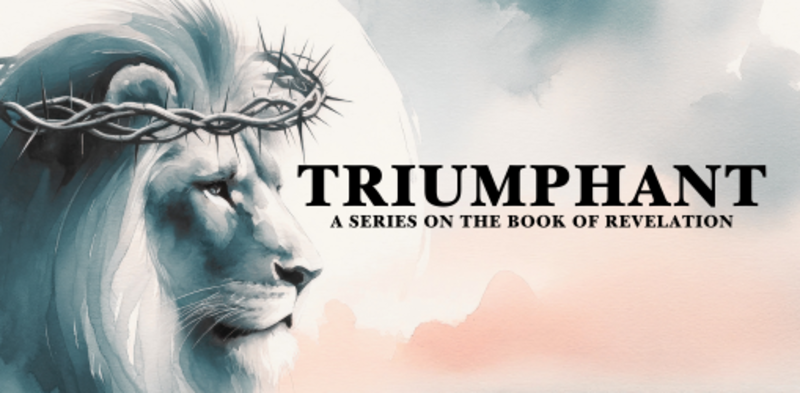
It is in this moment that history itself comes to a standstill. All of creation holds its breath. John is overcome with great sorrow as his tears embody the anguish of hope delayed—until the voice of one of the twenty-four elders breaks through the silence of heaven: “Weep no more; behold the Lion of the tribe of Judah, the Root of David, has conquered, so that he can open the scroll and its seven seals” (v. 5)
Who is this Lion? He is the One promised long ago: He is the Lion from the tribe of Judah who would come to rule as King (Gen. 49:9–10). He is the Root of Jesse foretold by Isaiah (Isa. 11:1, 10), the righteous Branch promised through David (Jer. 23:5–6), and the King whose reign will never end (2 Sam. 7:12–13; Luke 1:32–33). He is the First and the Last (Isa. 44:6; Rev. 1:17), the Origin of creation (John 1:3; Col. 1:16), and He is the Alpha and the Omega (Rev. 22:13). The prophet Jeremiah calls Him “Yahweh our Righteousness” (Jer. 23:6). Every covenant, every promise, and every hope finds its fulfillment in Him. He has overcome (Rev. 5:5).
So consider who it is who sits on the throne—and consider the One who has conquered sin and death to open the scroll. If this is who He is, then the Psalmist’s prayer must become your prayer: “Turn my eyes from looking at worthless things; and give me life in Your ways” (Ps. 119:37).
Why fix your eyes on what is worthless—your legacy, your wealth, your reputation—when there is One worthy to receive all power, wealth, wisdom, might, honor, glory, and blessing?
Do not settle for what cannot last. Turn to the One who alone is worthy.
In the words of C.T. Studd’s closing verses from his poem:
Oh let my love with fervor burn,
And from the world now let me turn;
Living for Thee, and Thee alone,
Bringing Thee pleasure on Thy throne;
Only one life, ’twill soon be past,
Only what’s done for Christ will last.
Only one life, yes only one,
Now let me say,”Thy will be done”;
And when at last I’ll hear the call,
I know I’ll say “twas worth it all”;
Only one life,’twill soon be past,
Only what’s done for Christ will last

