
We all wear glasses in this room. I am not referring to your contacts or the physical glasses your eye doctor prescribed. I am referring to your worldview—the lenses through which you interpret everything you see: God, yourself, others, suffering, evil, history, the purpose of life, and the future.
In our world today, people use a wide range of worldviews to make sense of reality. Theism holds that a personal God created and rules the world. Naturalism holds that the physical universe is all that exists. Pantheism identifies God with the world or sees God as present in everything. Postmodernism treats truth as personal, socially constructed, or tied to power. Nihilism holds that life has no ultimate meaning, purpose, or moral order.
Most people do not wear only one pair of glasses. They switch lenses depending on what suits them—a little theism for comfort, a little secularism for control, a little skepticism against authority, and a little self-rule for freedom. It may feel meaningful in the moment, but it cannot finally correct the vision problem. It still leaves reality blurred.
One of the clearest symbols of modern humanity’s hope was the World Trade Center. It took twelve years, from the earliest design stages in 1961 to the ribbon-cutting in 1973, to complete the Twin Towers, at a cost of about $900 million. The chief architect, Minoru Yamasaki, said the World Trade Center should become “a living representation of man’s belief in humanity, his need for individual dignity, his belief in the cooperation of men, and through this cooperation his ability to find greatness.”
That is a remarkable statement. The towers were meant to say something about us: our greatness, dignity, cooperation, and our ability to build a better world. Yet on September 11, 2001, it took less than two hours for those towers to fall, and nearly 3,000 lives were lost.
Brothers and sisters, that is not merely a tragedy in American history. It is a parable of the world we inhabit. We live in a world of conflict, bloodshed, injustice, suffering, and death. We build towers and call them peace. We create systems and call them progress. We trust power, wealth, cooperation, technology, politics, and human greatness to bring stability. Yet again and again, the world proves unable to save itself.
What we need is a biblical worldview—a way of seeing the world through the lens of God’s Word. Revelation pulls back the curtain on human history—past, present, and future—so we can see things as they really are. In Revelation 6:1–8, that curtain is drawn back on the world we know all too well: a world marked by conquest, war, famine, injustice, suffering, and death. Yet Revelation does not show us these things to make us despair. It shows us these things so we will see that the horsemen are permitted to ride only because the Lamb has the authority to open the seals.
Before we go any further in this sermon, do not miss who opens each seal. It is not the horsemen. It is not the devil. It is not the antichrist. It is not kings, nations, armies, or empires. The Lamb alone has the authority to open the seals and to allow the horsemen to ride.
As the Lamb opens the first four seals, do not think of the horsemen as strange figures waiting to be released in the distant future. Instead, think of them as the symbolic unveiling of the very world Jesus told us to expect—a world marked by conquest, violence, exploitation, and death. Yet Revelation 6 shows us something the evening news never can: the horsemen ride only because the Lamb opens the seals, and He alone is worthy to do so.
The Horsemen and the World Jesus Told Us to Expect
We are now entering a section of Revelation that may challenge how many of us have been taught to think about the end times. For many Christians, passages such as Revelation 6 and Matthew 24 have been interpreted almost entirely as future events, often within a framework known as the seven-year tribulation. Many have also been taught that the church will be removed from the earth before that tribulation begins.
I realize that, for some of you, that may be the only framework for understanding the end times you have ever known. Faithful Christians have held different views on these matters, so my goal is not to mock what you have been taught or force you into a different system. My goal is simply to ask you to do what the Bereans did—to search the Scriptures and see whether these things are so (see Acts 17:10-11).
What I want to show you is that Revelation 6 and Matthew 24 are not describing realities completely disconnected from the church’s present life. Jesus Himself told His disciples what this present age would look like:
And Jesus answered them, “See that no one leads you astray. For many will come in my name, saying, ‘I am the Christ,’ and they will lead many astray. And you will hear of wars and rumors of wars. See that you are not alarmed, for this must take place, but the end is not yet. For nation will rise against nation, and kingdom against kingdom, and there will be famines and earthquakes in various places. All these are but the beginning of the birth pains.” (Matt. 24:4-8)
Revelation 6 is not describing a strange world the church has never seen. It pulls back the curtain on the age Jesus described—a world marked by conquest, violence, exploitation, suffering, and death. The four horsemen symbolize realities that have marked human history since Christ’s ascension and will end when He returns.
Yet Jesus’ words also keep us from hopeless despair. These things are not the end. They are birth pains. And as painful as birth pains are, they remind us that something is coming: the kingdom of Christ in all its fullness. Until that day, the horsemen ride. Like birth pains, the realities they represent continue throughout this age and increase in frequency and intensity as history moves toward the return of Christ and the birth of the new creation. But understand this: they do not roam at their own leisure. The Lamb reigns, and He alone has the authority to open the seals.
So when the Lamb opens the seals and the four horsemen are revealed, we are shown the world Jesus told us to expect. But we are also shown what the world cannot see: conquest, violence, exploitation, and death are not rogue realities, nor do they unfold outside His sovereign will and authority.
The White Horse: The Lust for Conquest (vv. 1-2)
There is some debate about what the rider on the white horse represents, largely because certain features seem to mirror the way Jesus appears in Revelation 19:11–16, particularly the white horse He rides and the crown He wears. Others believe the rider represents a false Christ or even the antichrist because he seems to mimic Jesus’ appearance. The problem with these views is twofold: first, Jesus is the One who opens each of the seals; and second, the remaining horsemen clearly represent forces of destruction rather than specific individuals.
There are other suggestions, but the context of Revelation 6 suggests that the rider on the white horse belongs with the other three horsemen: war, famine, and death. Together, they represent the destructive realities that mark this present age. This connection may be reinforced by the first living creature who announces this horse and rider.
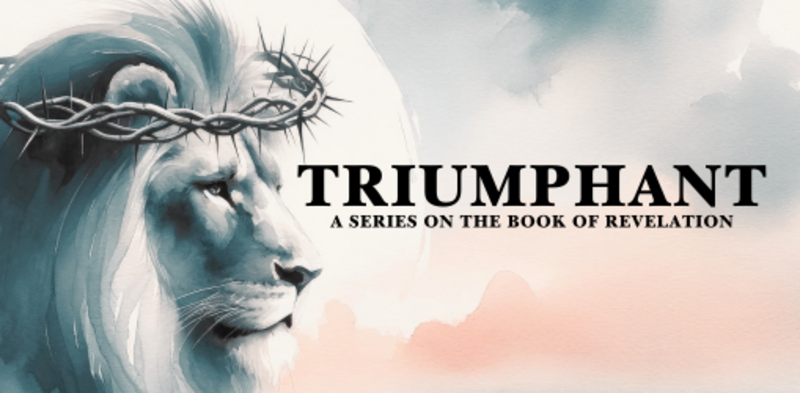
Notice that the first living creature has the face of a lion, representing strength, majesty, and power among the wild creatures. It is this creature that introduces the rider on the white horse. If there is a symbolic connection between the creature who speaks and the horseman who appears, then the first horseman fittingly represents conquest—the lust of kings, nations, empires, and rulers to expand their power, secure their kingdoms, and impose their will on others.
Unlike the kingdom Jesus will bring, this rider represents fallen humanity grasping for dominion apart from God. This horse and its rider promise peace but never deliver it. Their creed is simple: “If we can gain enough territory, enough power, enough influence, enough control, then we can secure the future.” But Revelation shows us the truth: conquest does not lead to peace. It prepares the way for the red horse.
The Red Horse: The Vandalism of Peace (vv. 3-4)
The Lamb then opens the second seal. In response, the heavenly creature with the face of an ox, representing domesticated strength, service, and labor—the kind of creature people use to bring forth life from the earth—says, “Come!” Then the red horse appears, and its rider is permitted to take peace from the earth so that people may slay one another.
If the white horse represents the lust for conquest, the red horse reveals what that lust produces. The world promises peace through power, but Revelation shows that power seized apart from God does not preserve peace; it vandalizes it. When God gives sinners over to themselves, the restraints that hold back violence are removed, and the human heart is exposed as it is and what it is capable of. This is why the rider is given a great sword, symbolizing violence, bloodshed, and the destructive force of war.
From the first murder in Genesis 4 to the wars and rumors of wars Jesus said would mark this age like birth pains in Matthew 24, human history has been stained with the blood of those created in God’s image. Nations rise against nations. Kingdoms seek to outdo kingdoms. Brother turns against brother. Neighbor turns against neighbor. When sin-cursed humanity seeks dominion apart from God, even in the name of peace, peace is among the first casualties.
Make no mistake: the rider on the red horse is not rogue. He is only “permitted” to take peace from the earth because the Lamb has authority to break the second seal. He does not seize the sword; he is “given” a great sword. The breaking of the second seal shows that even the violence of this age is not outside the sovereign hand of the Lamb. While the serpent of old was “a murderer from the beginning” and is “the father of lies” (John 8:44), Humanity’s propensity toward violence is the result of its fallen nature; it is mankind that robs the earth of the shalom it was created to experience. Yet even this violence remains under the authority of the Lamb.
The Black Horse: Exploitation of Need (vv. 5-6)
The Lamb opens the third seal, and the living creature with the face of a man says, “Come!” The irony is that while man symbolizes wisdom, reason, and the stewardship God entrusted to humanity, the black horse and its rider represent the exploitation of creation’s needs by mankind. The rider is seen holding a pair of scales, and a voice is heard saying, “A quart of wheat for a denarius, and three quarts of barley for a denarius, and do not harm the oil and wine.”
The scales symbolize measurement, rationing, and scarcity. In John’s day, a denarius was a day’s wage, so the announced prices of wheat and barley reveal a world where food is available yet barely affordable. A person could work all day and still barely survive. Meanwhile, the command not to harm the oil and wine suggests that while daily bread becomes burdensome for the poor, others’ comforts and luxuries remain protected. Human need becomes an opportunity for human greed. The black horse reveals that much of the world’s suffering stems from the corruption of human stewardship.
Humanity was created in God’s image to cultivate the earth, care for one another, and administer justice for the good of mankind and the rest of creation. But when people seek dominion apart from God, the needs of the earth and those who live on it are twisted into opportunities for profit. When mankind is given over to itself, human beings exploit one another and anything else in creation that offers an opportunity to get ahead of their neighbor. Yet even here, the rider is not sovereign and does not ride beyond the authority of the Lamb.
The Pale Horse: The Dominion of Death (vv. 7-8)
The Lamb opens the fourth seal, and the creature with the face of an eagle says, “Come!” Consider what an eagle represents: swiftness, height, watchfulness, and the realm just above the earth. When John hears this single word, he sees a pale horse, and its rider is named Death, with Hades following him. While the eagle soars over the earth, the pale horse gathers what man’s lust for conquest, readiness to kill, and greed produce—namely, death.
The horse’s color is disturbing. The Greek word translated “pale” (chlōros) denotes a greenish hue, suggesting the sickly color of decay, disease, and death. There is little left to the imagination with the name given to this rider. He is Death, and Hades follows behind him like a grave, collecting what death has taken.
This is the world east of Eden, where sin has brought decay to everything God created good. Death follows kings and nations. Death follows war. Death follows hunger, poverty, disease, and the neglect of creation. Death is the final enemy, and no human kingdom, political system, technological advancement, or amount of wealth or power can ultimately escape it.
But while the pale horse and its rider may terrify us, they are not sovereign. The Lamb is the One who breaks the seal. Death rides, yet the Lamb reigns. And all who belong to the Lamb are assured that in a world where the four horsemen are permitted to ride for a time, the One who opens the seals also says to His people: “Fear not, I am the first and the last, and the living one. I died, and behold I am alive forevermore, and I have the keys of Death and Hades” (Rev. 1:17–18).
Conclusion
What the apostle John and the seven churches likely found most reassuring in the vision of the four horsemen is the reminder that it is the Lamb—Christ Himself—who breaks each seal and permits the horsemen to ride. The power wielded by rulers and nations is granted by the One who sits sovereignly on the throne. Revelation 6:1–8 is given so that we might see the world as it really is and see the Lamb as He truly is.
The horsemen do not ride because chaos reigns. They ride because the Lamb opens the seals. And when the four living creatures cry, “Come!” their summons echoes the prayer Jesus taught us to pray: “Your kingdom come, your will be done...” (Matt. 6:10). The Lamb gives mankind over to its wickedness, not because evil is sovereign, but because He is accomplishing His sovereign purposes until His rule and reign are fully manifested on earth as it is in heaven. The four horsemen reveal to those who belong to the Lamb that God’s kingdom is indeed coming.
God’s kingdom comes not only through salvation, but also through judgment upon everything that ruins His creation.

