
The problem with man-made religion is that it creates a system where you must go up to God.
Let me give you some examples:
- Siddhartha Gautama (Buddha) said, “By oneself is evil done; by oneself is one defiled. By oneself is evil left undone; by oneself is one purified. Purity and impurity depend on oneself; no one can purify another.
- Confucius taught that personal excellence is achieved through discipline, desire, and effort.
- Karl Marx said that religion is “the sigh of the oppressed creature… the heart of a heartless world… the soul of soulless conditions… the opium of the people,” and that real change comes when we change the world ourselves.
- And Benjamin Franklin famously wrote, “God helps those who help themselves.”
What’s my main point? It’s that we humans have been trying to fix ourselves for thousands of years—and we keep ending up at the same dead-end street. Whether it’s religion telling us to reach up to God, or philosophy telling us to fix the world ourselves, the message remains the same: “It’s on us.”
Christianity tells a very different story, because the message of the Bible is not that we need to reach up to God, but that He came down to us by sending His only Son, and in Philippians 2:5–11 we see just how far He was willing to come down.
Jesus Became Like Us (vv. 5-7)
Humanity was created in God’s image to worship Him and reflect His glory in the world. As Genesis tells us, “God created man in his own image… male and female he created them” (Gen. 1:27). Humanity was not just another part of creation but a unique reflection of the Creator, called to live under His rule and blessing.
At the center of the garden stood the tree of the knowledge of good and evil, from which God forbade them to eat, warning, “in the day that you eat of it you shall surely die” (Gen. 2:17). Yet everything changed when the serpent questioned God’s word: “Did God actually say…?” (Gen. 3:1). The core of the temptation was a challenge to God’s goodness. Eve saw, took, and ate—and Adam followed (v. 6).
Their rebellion shattered their innocence: “the eyes of both were opened… and they sewed fig leaves together” (v. 7). Instead of life, they chose death. Believing the serpent’s lie, they doubted God’s goodness and received not blessing but the curse He had warned about.
Since then, humanity has been trying to fix what was broken. We attempt to deal with sin, guilt, and brokenness through our own efforts, but we always fail. No amount of effort can undo what sin has done. We cannot cleanse our hearts, nor can we reach God by our own might.
This is why Jesus became a man. He did not come because we were succeeding but because we were incapable of meeting God’s holy standard. God came to us when His Son entered our sin-cursed world, because there was no way we could climb out of it. Jesus became like us because it was impossible for us to become like Him. As Paul writes in Philippians 2:5–7, “though he was in the form of God, a thing to be grasped, but emptied himself, by taking the form of a servant, being born in the likeness of men.”
Jesus did not begin in Bethlehem. He has always existed as God. Though He possessed all divine rights, He did not cling to them but took on humanity. The One who created all things entered His creation, descending into our curse, yet without sin. And His works—giving sight to the blind and life to the dead—testify that He is, and always has been, God.
Why did Jesus become like us? This is why He came: “For the Son of Man came to seek and to save the lost” (Luke 19:10). He came to fulfill a promise spoken by the prophet Isaiah hundreds of years before His birth: “Come now, let us reason together, says the Lord: though your sins are like scarlet, they shall be as white as snow; though they are red like crimson, they shall become like wool” (Isa. 1:18).
Jesus Died for Us (v. 8)
Now, I know we are celebrating the resurrection of Jesus Christ today, but His resurrection makes no sense apart from His crucifixion. Before our sins could be made white as snow, they had to be placed upon Him—every sin, every failure, every stain. All of it. From His first cry in the manger to His prayerful plea in the garden of Gethsemane, Jesus lived under the shadow of the cross.
And He never ran from that shadow—He moved toward it. Before He carried the cross to Golgotha, He had already embraced it. Do not think for a second that Jesus was a victim. He told His disciples, “See, we are going up to Jerusalem… [the Son of Man] will be mocked and shamefully treated and spit upon” (Luke 18:31–32). He said this while walking toward the very suffering He described. Jesus was no victim.
Why did He do it? Was there another way? Yes—there was another way: that we would bear the full weight of God’s just wrath. God’s justice would still be satisfied, but we would be the ones to pay the price. Instead, “He humbled himself by becoming obedient to the point of death—even death on a cross” (Phil. 2:8).
God’s wrath is not arbitrary—it flows from His holy and perfect character. He must uphold justice because He is just (Isa. 42:8; Rom. 1:18–20). And humanity, in its rebellion, has rejected Him (Rom. 1:21–23). The problem is not that God is unjust, but that man is deeply sinful—so much so that when given the opportunity, humanity did not merely reject God, but crucified Him (Acts 2:22–23).
We see this clearly in the final hours of Jesus’ life. Though innocent, He was arrested, mocked, beaten, and handed over to Pontius Pilate. When given the choice between Jesus and Barabbas, the crowd chose a murderer over the Author of life and demanded that Jesus be crucified.
Pilate, thinking he held authority, said to Him, “Do you not know that I have authority to release you and authority to crucify you?” But Jesus answered, “You would have no authority over me at all unless it had been given you from above” (John 19:10–11). Even in that moment, the cross was not forced upon Jesus—it was embraced by Him.
Pilate then had Jesus scourged and handed Him over to be crucified (Matt. 27:24–26). Before the cross came the scourging—a brutal beating designed to tear flesh from bone. And after the scourging, before the cross, came the mockery.
This is where we see what could be called foreshadowing—when an event points ahead to what is to come. Between the scourging and the crucifixion, the soldiers unknowingly acted out a scene that pointed beyond the cross:
Then the soldiers of the governor took Jesus into the governor’s headquarters, and they gathered the whole battalion before him. And they stripped him and put a scarlet robe on him, and twisting together a crown of thorns, they put it on his head and put a reed in his right hand. And kneeling before him, they mocked him, saying, “Hail, King of the Jews!” And they spit on him and took the reed and struck him on the head. And when they had mocked him, they stripped him of the robe and put his own clothes on him and led him away to crucify him.
In Philippians 2:9–11, we are told that after Jesus endured the cross for sinners, the humbling was over, and what had always rightfully belonged to Him was fully revealed—He is both Savior and Lord: “Therefore God has highly exalted him and bestowed on him the name that is above every name, so that at the name of Jesus every knee should bow, in heaven and on earth and under the earth, and every tongue confess that Jesus Christ is Lord, to the glory of God the Father.”
Before Jesus was crucified for our sins, buried in a borrowed tomb, and raised on the third day, the devil did his worst through the soldiers who mocked Him. Jesus was stripped, flogged, and handed over to a battalion—possibly hundreds of soldiers—who gathered to ridicule Him. They clothed Him in a scarlet robe, twisted a crown of thorns onto His head, and placed a reed in His hand. They knelt before Him in mock worship, crying out, “Hail, King of the Jews!” Then they spat on Him, beat Him with the reed, struck Him on the head, stripped Him again, and led Him away to be crucified.
Do you see the foreshadowing? Even in their mockery, they were revealing why He was born, what He came to do, and what He would accomplish on the cross.
Jesus Redeemed Us (vv. 9-11)
What the soldiers meant for evil, God displayed the good He was accomplishing through His Son. When they flogged, mocked, and crucified Jesus, they did not realize that centuries earlier God had spoken through the prophet Isaiah: “But he was pierced for our transgressions; he was crushed for our iniquities; the punishment that brought us peace was upon him, and by his wounds we are healed” (Isa. 53:5).
After scourging our Savior, they placed a scarlet robe on Him to mock Him—but they did not know that God had already declared: “Though your sins are like scarlet, they shall be as white as snow… though they are red like crimson, they shall become like wool” (Isa. 1:18).
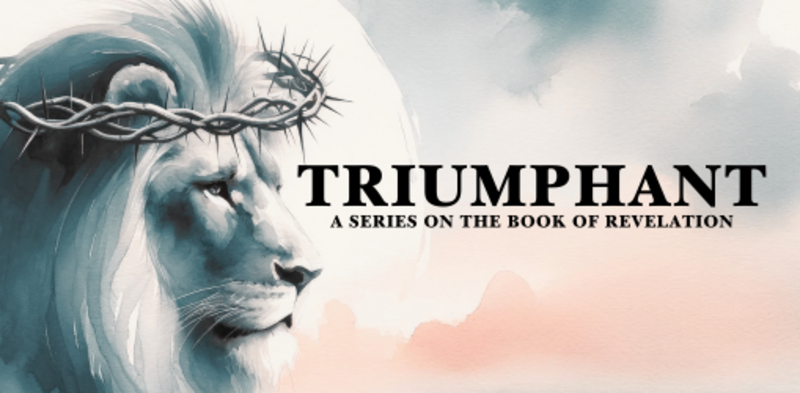
The soldiers twisted a crown of thorns as a form of mockery, reflecting their perverted sense of justice, yet without realizing they were placing upon Him the very representation of the curse of sin. From the beginning, after sin entered the world, God said, “thorns and thistles it shall bring forth for you” (Gen. 3:18). They mocked the Lord of glory without knowing that He was born to redeem sinners and reverse the curse. What they meant for ridicule was, in reality, a declaration: the curse that was ours was being placed upon Him. As Isaiah also declared, “All we like sheep have gone astray… and the LORD has laid on him the iniquity of us all” (Isa. 53:6).
The soldiers placed a reed in Jesus’ right hand and knelt before Him, mocking Him with the words, “Hail, King of the Jews!” (Matt. 27:29). The reed—a thin and fragile cane—was intended as a counterfeit scepter, a symbol of mock authority. By placing it in His right hand, they sought to ridicule His claim to power, since the right hand represents strength and sovereignty. Yet their actions were not only cruel—they were deeply ironic. In their attempt to humiliate Him, they were unknowingly pointing to the very authority and kingship that truly belonged to Christ. Everything about this moment was staged to mock Him:
- Scarlet robe → a fake royal garment
- Crown of thorns → a twisted parody of a crown
- Reed in His right hand → a counterfeit scepter
- Kneeling before Him → sarcastic “worship”
Oh, that they would have known that the One they mocked was the very One Isaiah prophesied about centuries earlier: “Behold, the virgin shall conceive and bear a son… Immanuel” (Isa. 7:14). Oh, that they would have known that the One before whom they bowed in mocking worship is the very One of whom God declared: “To me every knee shall bow, every tongue shall swear allegiance” (Isa. 45:22–23).
Oh, that they would have known that the reed they used to strike His wounded head—already pierced with thorns—was itself becoming bruised. With every blow it bent, splintered, and weakened, ready to snap. And oh, that they would have understood: the very reed in their hands testified to what was spoken centuries before, “a bruised reed he will not break” (Isa. 42:3).
Do you see the foreshadowing? What the soldiers meant for evil, God ordained for good—even for sinners like us. They bruised the reed and beat King Jesus, but in doing so, our Savior bore the judgment we deserved, so that He might heal and restore those who are broken.
Oh, that the soldiers could have seen then that the King they struck does not break the bruised—He was broken so that the bruised might be made whole. This was no accident. This was no tragedy. This was the plan of God, spoken beforehand through His prophet. Jesus was not a victim—He was the fulfillment.
Conclusion
Jesus was then forced to carry our cross to Golgotha, where He died the death we deserved for our sins: “For our sake he made him to be sin who knew no sin, so that in him we might become the righteousness of God” (2 Cor. 5:21). After He died, they took Him down from the cross and placed Him in a borrowed tomb. But on the third day… He rose from the grave.
Fifty days later, Peter stood before a crowd and declared the hope of the nations:
Men of Israel, hear these words: Jesus of Nazareth, a man attested to you by God with mighty works and wonders and signs that God did through him in your midst, as you yourselves know— this Jesus, delivered up according to the definite plan and foreknowledge of God, you crucified and killed by the hands of lawless men. God raised him up, loosing the pangs of death, because it was not possible for him to be held by it. (Acts 2:22-24).
This is why Paul could write: “Therefore God has highly exalted him and bestowed on him the name that is above every name, so that at the name of Jesus every knee should bow… and every tongue confess that Jesus Christ is Lord” (Phil. 2:9–11). The One they mocked is the One God exalted. The One they struck is the One before whom every knee will bow. The question is not if every knee will bow—but when.
The resurrection is God’s declaration that the One they crucified is the risen King—alive, exalted, and now reigning, worthy of every knee that will bow and every tongue that will confess that Jesus Christ is Lord.

